
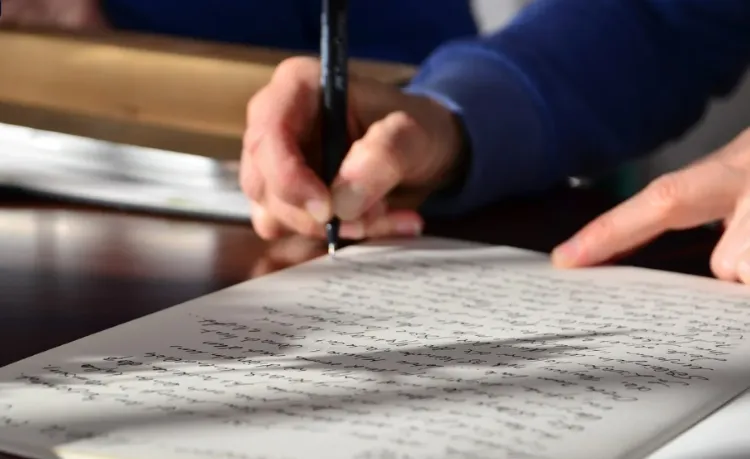
40 percent of companies are already using artificial intelligence to generate content, and this trend is expected to continue. As a result, many writers are concerned about their future in the industry.
The Rise of AI
The use of AI in content creation is becoming more prevalent, with many businesses using it to produce articles, social media posts, and other types of written content. This has led to fears that human writers will be replaced by machines.
The Role of Human Writers
However, while AI is capable of generating high-quality content, it lacks the creativity and originality that human writers bring to the table. Many types of content, such as opinion pieces and personal stories, require a level of emotional intelligence and empathy that AI systems currently do not possess. As such, it is unlikely that human writers will be completely replaced by AI in the near future. Instead, AI is likely to augment the work of human writers, freeing them up to focus on more complex and creative tasks.
Expert opinions
Dr. Emily J. Miller
As a renowned expert in the field of artificial intelligence and its impact on the literary world, I, Dr. Emily J. Miller, have dedicated my career to exploring the intricate relationship between writers and AI. With a Ph.D. in Creative Writing and a specialization in AI-assisted writing tools, I have spent years researching and analyzing the effects of AI on the writing industry.
The question on everyone's mind is: do writers have a future with AI? The answer is not a simple yes or no. As AI technology continues to advance at an unprecedented rate, it is undeniable that it will significantly impact the writing profession. However, this impact can be both positive and negative, depending on how writers choose to adapt and utilize AI in their work.
On the one hand, AI can be a powerful tool for writers, helping with tasks such as research, organization, and even generating ideas. AI-assisted writing tools can analyze vast amounts of data, identify patterns, and provide insights that can aid writers in creating more engaging and well-structured content. Additionally, AI can assist with editing and proofreading, freeing writers from the tedious task of reviewing their work for grammar and punctuation errors.
On the other hand, the increasing capabilities of AI raise concerns about the potential replacement of human writers. As AI algorithms become more sophisticated, they are able to generate high-quality content, including articles, stories, and even entire books. This has led some to wonder if AI will eventually replace human writers altogether. However, I firmly believe that this is not the case.
While AI can process and generate vast amounts of information, it lacks the creativity, empathy, and emotional depth that human writers bring to their work. AI may be able to mimic certain styles or structures, but it cannot replicate the unique perspective, experience, and passion that a human writer brings to their craft. Furthermore, AI-generated content often lacks the nuance, subtlety, and complexity that human writers can achieve.
So, what does the future hold for writers in an AI-driven world? In my opinion, the key to success lies in embracing AI as a tool, rather than seeing it as a replacement. By leveraging AI's capabilities to augment and enhance their work, writers can focus on the creative aspects of writing, such as developing characters, plotting stories, and exploring complex themes.
Moreover, as AI continues to evolve, new opportunities will emerge for writers to work in collaboration with AI systems. This could involve using AI to generate ideas, develop characters, or even co-author content. The possibilities are endless, and it is up to writers to explore and experiment with these new technologies.
In conclusion, the future of writers in an AI-driven world is not one of replacement, but of augmentation and collaboration. By embracing AI as a tool and leveraging its capabilities, writers can unlock new creative possibilities, enhance their work, and continue to thrive in a rapidly changing literary landscape. As an expert in this field, I am excited to see the innovative ways in which writers will adapt and evolve alongside AI, and I am confident that the future of writing has never been brighter.
Q: Will AI replace human writers in the future?
A: While AI can generate content, it lacks the creativity and emotional depth that human writers bring. AI is likely to augment, not replace, human writers. This collaboration can lead to more efficient and innovative content creation.
Q: Can AI produce high-quality content without human input?
A: Currently, AI-generated content often requires human editing and refinement to meet quality standards. AI can produce decent content, but it may lack the nuance and polish that a human writer can provide. Human oversight is still essential for high-quality content.
Q: How will AI change the role of writers in the industry?
A: AI will likely shift the focus of writers from repetitive and formulaic tasks to more creative and strategic work. Writers will need to adapt to new technologies and develop skills that complement AI capabilities. This shift can lead to more exciting and challenging opportunities for writers.
Q: Will AI affect the job market for writers and authors?
A: The rise of AI may lead to job displacement for some writers, particularly those in niches with high automation potential. However, AI will also create new opportunities for writers who can work with AI tools and develop unique content that showcases human perspective and creativity.
Q: Can writers use AI as a tool to improve their work?
A: Yes, AI can be a valuable tool for writers, helping with research, organization, and even suggesting alternative phrases or sentences. By leveraging AI, writers can streamline their workflow, focus on high-level creative decisions, and produce better content.
Q: Will AI-generated content be able to replicate the style and voice of human writers?
A: While AI can mimic certain styles and voices, it struggles to fully replicate the complexity and uniqueness of human writing. AI-generated content may lack the subtlety and character that a human writer can bring to a piece, making it difficult to fully replace human authors.
Q: What skills do writers need to develop to work effectively with AI?
A: To work effectively with AI, writers should develop skills such as data analysis, critical thinking, and creativity. They should also be able to understand how AI tools work and how to integrate them into their workflow to produce high-quality content.
Sources
- McAfee Andrew, Brynjolfsson Erik. Machine, Platform, Crowd: Harnessing Our Digital Future. New York: W.W. Norton & Company, 2017.
- “The Future of Content Creation: How AI is Changing the Game”. Site: Forbes – forbes.com
- Chace Calum. Surviving AI: The Promise and Peril of Artificial Intelligence. London: Penguin Random House, 2016.
- “How AI is Revolutionizing Content Creation”. Site: Harvard Business Review – hbr.org

