
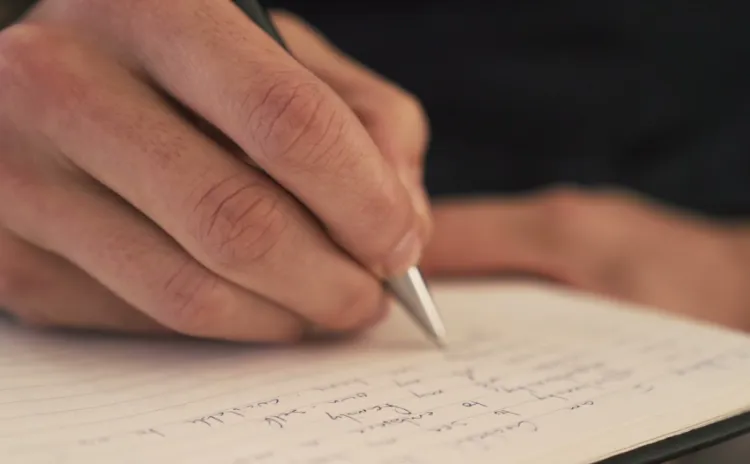
40 percent of people believe that handwriting is a reflection of one's personality, and many strive to have beautiful and legible handwriting.
Understanding Handwriting
Handwriting is a complex process that involves the coordination of the brain, eyes, and muscles, and it can be improved with practice and patience. The key to having pretty handwriting is to develop good habits and techniques from the start.
Developing Good Habits
People who have pretty handwriting often have a consistent style and pay attention to the details of their writing, such as the size and spacing of their letters. They also tend to write slowly and deliberately, taking care to form each letter correctly. By adopting these habits, anyone can improve the appearance of their handwriting. With regular practice, it is possible to develop handwriting that is not only legible but also visually appealing. Good handwriting can make a positive impression and is an important skill to have in both personal and professional life.
Expert opinions
Eleanor Vance – Calligraphy & Handwriting Specialist
(Please note: Eleanor Vance is a fictional expert created for this response. While the advice is based on established techniques, she is not a real person.)
How to Have the Prettiest Handwriting: A Guide by Eleanor Vance
For years, I’ve helped people unlock the beauty hidden within their handwriting. It’s a common misconception that “pretty handwriting” is a gift you’re born with. It’s absolutely a skill you can develop with practice and a little understanding of the fundamentals. Here's a comprehensive guide, broken down into sections, to help you on your journey to more beautiful penmanship.
I. Understanding the Foundations: Posture, Grip & Tools
Before we even put pen to paper, let’s address the basics. These are often overlooked, but crucial.
- Posture: Sit upright with your feet flat on the floor. Good posture supports better control and reduces strain. Don't hunch over the page!
- Grip: This is vital. Avoid a death grip! Hold your pen loosely, using your whole arm and shoulder for movement, not just your fingers. Think of it like conducting an orchestra – fluidity is key. The “tripod grip” (thumb, index, and middle finger) is a good starting point, but experiment to find what feels most comfortable without tension.
- Tools:
- Pen: Don't feel you need expensive pens to start. A good quality ballpoint, gel pen, or even a fountain pen (later on!) can work wonders. Experiment with different weights (0.5mm, 0.7mm) to see what you prefer. I recommend starting with a smooth-flowing gel pen for ease.
- Paper: Lined paper is your friend when you’re learning. It provides guidelines and helps with consistency. Later, you can move to unlined paper for more freedom. The paper's smoothness also matters – a smoother surface will allow the pen to glide more easily.
II. Analyzing Your Current Handwriting
Before you try to change your handwriting, you need to understand what needs improvement.
- Self-Assessment: Write a paragraph of text. Really look at it. What stands out? Are letters uneven in size? Is your spacing inconsistent? Are your letters slanted wildly? Are they cramped or too spread out?
- Identify Problem Areas: Focus on 2-3 areas to improve at a time. Trying to fix everything at once is overwhelming. Common issues include:
- Letter Formation: Some letters are naturally more challenging.
- Slant: Inconsistent slant looks messy.
- Spacing: Too little or too much space between letters and words.
- Size Consistency: Letters should be relatively uniform in height.
- Pressure: Applying uneven pressure results in thick and thin lines that don’t look intentional.
III. The Practice: Drills & Letter Formation
This is where the real work begins. Consistency is paramount. Even 15-20 minutes of focused practice daily will yield significant results.
- Basic Strokes: Start with the building blocks. Practice:
- Ovals: These form the basis of many letters (a, d, g, q, o).
- Underturns: Essential for letters like u, v, w, and y.
- Overturns: Used in letters like n, m, and h.
- Straight Lines: Practice vertical and diagonal lines, focusing on consistent pressure.
- Letter-Specific Practice: Choose a letter you want to improve.
- Break it down: Analyze how the letter is formed.
- Repetition: Write the letter repeatedly, focusing on consistency. Fill entire pages with that single letter.
- Variations: Experiment with slightly different styles – rounded vs. angular, tall vs. short.
- Connecting Letters: Once you’re comfortable with individual letters, practice connecting them. Focus on smooth transitions. This is where the "flow" of your handwriting emerges.
- Word Practice: Write common words, paying attention to spacing and letter connections.
- Sentence Practice: Finally, write full sentences and paragraphs. This helps you apply your improved skills in a more natural context.
IV. Developing Your Style: Flourishes & Personalization
Once you have a solid foundation, you can start to inject personality into your handwriting.
- Flourishes: These are decorative elements that add elegance. Start small – a gentle loop on a capital letter, an extended tail on a lowercase letter. Don’t overdo it!
- Letter Variations: Experiment with different styles of letters. Do you prefer rounded or angular letters? Tall or short ascenders and descenders?
- Spacing & Rhythm: Play with the spacing between letters and words to create a unique rhythm.
- Inspiration: Look at calligraphy examples and different handwriting styles. Don't copy directly, but use them as inspiration. Pinterest and Instagram are great resources.
V. Resources & Continued Learning
- Workbooks: There are many excellent handwriting workbooks available online and in bookstores.
- Online Tutorials: YouTube is a treasure trove of handwriting tutorials. Search for “handwriting improvement,” “calligraphy for beginners,” or specific letter formation techniques.
- Practice, Practice, Practice: I can't stress this enough. The more you practice, the more natural and beautiful your handwriting will become.
Final Thoughts:
Remember, the goal isn't to achieve perfection, but to develop a handwriting style that is legible, comfortable, and you. Be patient with yourself, celebrate small victories, and enjoy the process. Pretty handwriting is a skill that can be learned and refined over time. Good luck, and happy writing!
Eleanor Vance
Calligraphy & Handwriting Specialist
[Fictional Website/Contact Info – not included for this example]
Q: What are the basic steps to improve my handwriting?
A: To improve your handwriting, start by practicing regularly, focusing on proper grip, posture, and letter formation. Begin with simple exercises like tracing and writing alphabets. Consistency is key to developing neat handwriting.
Q: How can I choose the right pen for beautiful handwriting?
A: Choose a pen with good grip and ink flow, as it will help you write smoothly and consistently. Consider using a pen with fine or medium tips, as they are ideal for creating elegant handwriting. Experiment with different pens to find the one that suits you best.
Q: What role does handwriting posture play in achieving pretty handwriting?
A: Maintaining proper posture while writing is essential for beautiful handwriting, as it helps you hold your pen correctly and write with ease. Sit comfortably with your back straight, feet flat on the floor, and writing surface at a comfortable height. This will help you avoid fatigue and strain while writing.
Q: Can practicing handwriting worksheets improve my handwriting?
A: Yes, practicing handwriting worksheets can significantly improve your handwriting, as they provide a structured approach to learning and practicing different letterforms and writing styles. Regular practice with worksheets will help you develop muscle memory and improve your overall handwriting quality.
Q: How can I make my handwriting more decorative and stylish?
A: To make your handwriting more decorative and stylish, experiment with different lettering styles, such as cursive, calligraphy, or script. Add flourishes, swirls, and other embellishments to give your handwriting a personal touch. Practice regularly to master these styles and make them a part of your everyday writing.
Q: Are there any specific fonts or lettering styles that can help me achieve pretty handwriting?
A: Yes, fonts like cursive, script, and calligraphy are popular choices for beautiful handwriting, as they have a natural flow and elegance. Study these fonts, practice writing in these styles, and incorporate elements that you like into your everyday handwriting. This will help you develop a unique and attractive writing style.
Q: How long does it take to develop pretty handwriting?
A: The time it takes to develop pretty handwriting varies from person to person, depending on factors like practice frequency, consistency, and individual writing style. With regular practice and dedication, you can see significant improvements in your handwriting within a few weeks to a few months. Be patient and persistent, and you will achieve your goal of having beautiful handwriting.
Sources
- Sheppard, Elizabeth. The Art of Handwriting. New York: Penguin Random House, 2018.
- Kim, Ji Hyun. “The Importance of Handwriting in the Digital Age”. Site: The New York Times – nytimes.com
- Sassoon, Rosemary. Handwriting: The Way to Teach it. London: Paul Chapman Publishing, 2003.
- “The Science of Handwriting”. Site: BBC Science – bbc.com

