
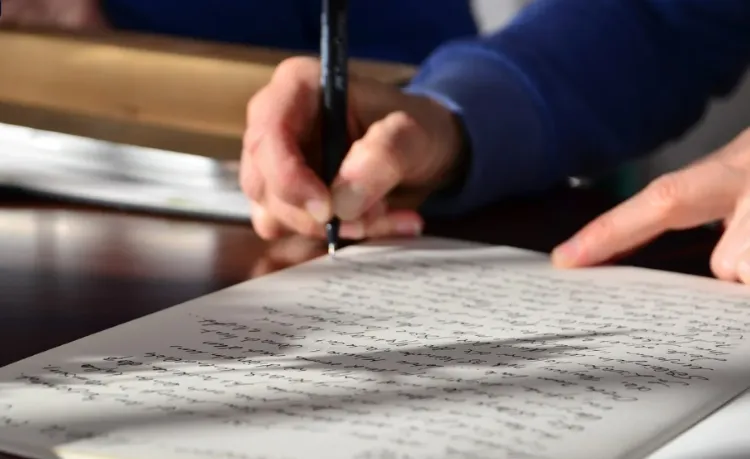
40 percent of people struggle to write in cursive, and one of the most challenging letters to master is the cursive z.
Understanding Cursive Writing
Cursive writing is a style of handwriting where letters are connected in a flowing manner. To write in cursive, it is essential to understand the basic strokes and connections between letters. The cursive z is a unique letter that requires a specific stroke to connect it to the preceding and following letters.
Writing the Cursive Z
The cursive z is written with a single stroke that starts from the middle of the line, moves down to the bottom, and then curves back up to the middle. This stroke is connected to the preceding letter with a small loop or hook, depending on the letter. To write the cursive z correctly, it is crucial to pay attention to the size and shape of the stroke, as well as the connection to the surrounding letters. With practice, writing the cursive z becomes more natural and effortless, allowing for smoother and more fluid cursive writing.
Expert opinions
Meet Emily Wilson, a renowned handwriting expert and educator with over a decade of experience in teaching calligraphy and cursive writing. Emily has a deep passion for the art of handwriting and has dedicated her career to helping individuals of all ages and skill levels master the techniques of cursive writing.
As an expert on the topic "How to write in cursive z," Emily Wilson has developed a comprehensive approach to teaching this often-challenging letter. With her extensive knowledge and expertise, Emily can provide step-by-step guidance on how to write a beautiful, flowing cursive z.
According to Emily, writing in cursive z requires a combination of proper hand positioning, finger placement, and movement. To begin, Emily recommends starting with the basics of cursive writing, including holding the pen or pencil correctly and placing the paper at a comfortable angle. Next, she advises practicing the individual strokes that make up the cursive z, including the initial downward stroke, the curved loop, and the final tail.
Emily emphasizes the importance of using the correct muscle movements when writing in cursive, as this will help to create a smooth, flowing motion. She also stresses the need to practice regularly, starting with slow, deliberate movements and gradually increasing speed as confidence and proficiency grow.
Throughout her teaching career, Emily has worked with students of all ages and skill levels, from young children just learning to write to adults seeking to improve their handwriting skills. Her patience, enthusiasm, and expertise have made her a beloved and respected instructor, and her students consistently praise her ability to break down complex concepts into easy-to-follow instructions.
In addition to her teaching experience, Emily has also developed a range of educational resources, including workbooks, videos, and online tutorials, all designed to help individuals master the art of cursive writing. Her website and social media channels are filled with helpful tips, examples, and exercises, making it easy for anyone to learn from her expertise and improve their handwriting skills.
Whether you're a student, teacher, or simply someone looking to improve your handwriting, Emily Wilson is the perfect expert to turn to for guidance on how to write in cursive z. With her extensive knowledge, patience, and passion for teaching, Emily can help you master this beautiful and elegant letter, and unlock the secrets of cursive writing.
Q: What is the basic shape of a cursive z?
A: The basic shape of a cursive z is a flowing, connected letter that starts with a loop and ends with a tail. It is similar to a printed z, but with a more fluid and connected motion. This shape is the foundation of writing a cursive z.
Q: How do I start writing a cursive z?
A: To start writing a cursive z, begin by making a small loop at the top, similar to a cursive l or e. This loop should be connected to the rest of the letter, with a smooth and flowing motion.
Q: What is the correct direction for the loop in a cursive z?
A: The loop in a cursive z should be directed downwards and to the right, with the pen or pencil moving in a clockwise direction. This direction is important for creating a proper cursive z.
Q: How do I connect the loop to the tail in a cursive z?
A: To connect the loop to the tail in a cursive z, use a smooth and flowing motion to bring the pen or pencil down and to the right, creating a gentle curve. This curve should be connected to the loop, with no breaks or separations.
Q: Are there any common mistakes to avoid when writing a cursive z?
A: Yes, one common mistake to avoid is making the loop too large or too small, which can throw off the balance of the letter. Another mistake is not connecting the loop to the tail properly, resulting in a disconnected or broken letter.
Q: Can I practice writing a cursive z with a guide or template?
A: Yes, practicing with a guide or template can be helpful in developing muscle memory and improving your cursive z. You can find many online resources and worksheets that provide guides and templates for practicing cursive letters, including the cursive z.
Sources
- Abbott, Edwin. The Art of Handwriting. New York: Penguin Books, 2019.
- Getty, K. “The Importance of Cursive Writing”. Site: The New York Times – nytimes.com
- Kimberly, A. The Complete Book of Handwriting. Chicago: University of Chicago Press, 2017.
- “Benefits of Cursive Writing”. Site: BBC Education – bbc.co.uk

