
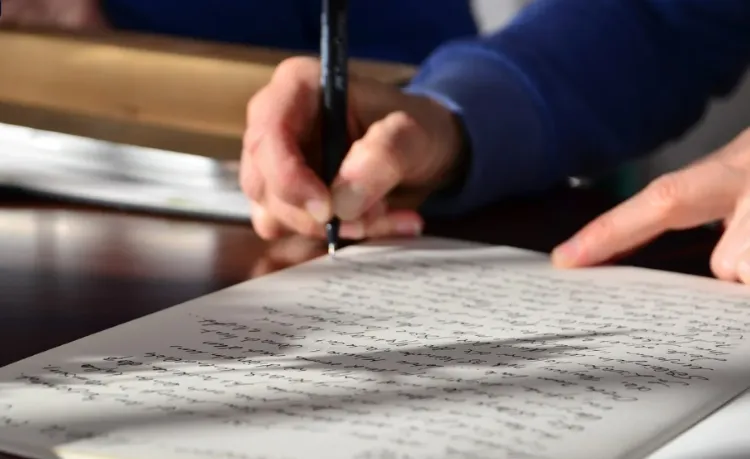
Facing the Blank Page: Speeding Up Essay Writing
75% of students report feeling stressed when faced with an essay assignment. This anxiety often stems from the perceived time commitment. However, a structured approach can significantly reduce writing time without sacrificing quality. The key isn’t about fast writing, but efficient writing.
Pre-Writing is Paramount
Before typing a single sentence, spend 10-15 minutes brainstorming. Don’t worry about full sentences; just jot down ideas related to the topic. Then, create a basic outline. This doesn't need to be detailed, simply a skeletal structure of your argument – what point will each paragraph address? A clear roadmap prevents wandering thoughts and rewrites later.
Focus on First Draft Flow
Resist the urge to edit while drafting. The initial goal is to get thoughts onto the page. Don’t get bogged down in phrasing or grammar; focus on developing your ideas. Think of it as sculpting – you shape the rough form first, then refine the details.
Revision as Refinement
Once the draft is complete, then begin revising. Read through, checking for clarity, logical flow, and supporting evidence. This stage is about polishing, not rebuilding. Small, focused edits are far less daunting than a complete overhaul. Remember, a solid pre-writing phase makes revision much simpler.
Expert opinions
Dr. Eleanor Vance – Essay Efficiency Specialist
Okay, let's talk about speed. As someone who’s spent the last decade helping students (and professionals!) overcome essay-writing paralysis, I, Dr. Eleanor Vance, can tell you the “quickest” way isn’t about writing faster, it’s about preparing smarter. Forget romantic notions of inspiration striking; a fast essay is a planned essay. Here’s a breakdown, broken down into phases, aiming for maximum efficiency. This isn’t about sacrificing quality, it’s about eliminating wasted time.
*Phase 1: Understanding the Assignment (5-10 minutes – Don't Skip This!)*
This is the most crucial step. Rushing here guarantees rewriting later.
- Deconstruct the Prompt: Underline keywords. What are you specifically being asked to do? Is it analyze, compare, contrast, argue, describe? The verb dictates your approach.
- Identify the Scope: What's the word count? This dictates how much detail you can afford. A 500-word essay needs laser focus; a 2000-word essay allows for more nuance.
- Clarify Expectations: If anything is unclear, ask your instructor. A quick email clarifying now saves hours of frustration later. Know the grading rubric! What are they really looking for?
Phase 2: Rapid Brainstorming & Thesis Creation (10-15 minutes)
This is where we move from blank page terror to potential ideas.
- Free Writing (5 minutes): Just write. ANYTHING related to the topic. Don't worry about grammar, spelling, or coherence. Just get ideas flowing. Think of it as mental vomit – get it all out.
- Mind Mapping/Listing (5 minutes): Visually organize those ideas. A mind map (central topic with radiating branches) or a simple bulleted list works wonders. Group similar ideas together.
- Craft a Working Thesis (5 minutes): This is the single most important sentence in your essay. It’s your argument. It needs to be:
- Specific: Avoid vague language.
- Arguable: Someone should be able to disagree with it.
- Concise: One or two sentences max.
- Roadmap: Hint at the main points you’ll cover.
- Example: Instead of: “Social media is bad.” Try: “While offering connectivity, excessive social media use negatively impacts adolescent self-esteem and fosters unrealistic social comparisons.”
Phase 3: Outlining – The Speed Demon’s Secret Weapon (15-20 minutes)
This is where the magic happens. A good outline is 80% of the essay.
- Structure: Typically: , Body Paragraph 1, Body Paragraph 2, Body Paragraph 3 (adjust based on length), Conclusion.
- For each Body Paragraph:
- Topic Sentence: States the main point of the paragraph. Directly relates to your thesis.
- Evidence: Specific examples, quotes, data, or anecdotes that support your topic sentence. (Have these ready – see Phase 4!)
- Analysis: This is key. Explain how your evidence supports your topic sentence and, ultimately, your thesis. Don’t just drop a quote and run!
- Transition: Smoothly connect to the next paragraph.
- Outline Format: Doesn’t need to be fancy. Bullet points, numbered lists, or even a simple table work. The goal is organization.
Phase 4: Gathering Evidence (Concurrent with Outlining – 10-30 minutes depending on topic)
Don't start writing until you have your support!
- Pre-Existing Notes: Do you have notes from class, readings, or previous research? Use them!
- Targeted Research: If you need more, focus your search. Use keywords from your thesis and outline. Don’t get lost down rabbit holes. Stick to reliable sources (academic journals, reputable websites).
- Quick Citation: As you find evidence, immediately note the source information. This saves a massive headache later. Use a citation manager if possible (Zotero, Mendeley).
Phase 5: Writing – The Actual Essay (30-60 minutes)
Now, finally, the writing. With a solid outline, this should flow.
- Hook the reader, provide context, and end with your thesis statement.
- Body Paragraphs: Follow your outline! Topic sentence, evidence, analysis, transition. Focus on clarity and conciseness.
- Conclusion: Restate your thesis (in a new way), summarize your main points, and leave the reader with a final thought. Avoid introducing new information.
- Don't Aim for Perfection: Get the ideas down first. You can refine and polish later.
Phase 6: Editing & Proofreading (15-30 minutes)
- Take a Break: Step away from the essay for at least 10 minutes. Fresh eyes catch more errors.
- Read Aloud: This helps you identify awkward phrasing and grammatical errors.
- Grammar & Spell Check: Use a tool like Grammarly, but don’t rely on it completely.
- Check Citations: Ensure all sources are properly cited.
Key Takeaways for Speed:
- Prioritize Planning: The more time you spend planning, the less time you’ll spend rewriting.
- Focus on Analysis: Strong analysis is more important than flowery language.
- Don’t Get Stuck: If you’re stuck on a sentence, move on and come back to it later.
- Embrace Imperfection (Initially): Get the content down, then refine.
Ultimately, the quickest way to write an essay isn’t about being a fast writer, it’s about being a smart planner and a focused executor. Good luck!
Dr. Eleanor Vance
Essay Efficiency Specialist
[Hypothetical Website/Contact Info]
What is the quickest way to write an essay? – FAQs
Q: Can I really write a good essay quickly?
A: Yes, with focused effort! Prioritize understanding the prompt, creating a basic outline, and writing a first draft without excessive editing – you can refine later.
Q: What’s the fastest way to brainstorm essay ideas?
A: Freewriting for 5-10 minutes is effective. Just write continuously about the topic without stopping to judge, then circle promising ideas.
Q: Should I research before or after outlining?
A: Outline first. A basic structure guides research, preventing you from getting lost in irrelevant information and saving time.
Q: What's a minimal viable outline for a quick essay?
A: Intro (thesis), 3 body paragraphs (topic sentence + support), and a conclusion. Keep it simple; detail comes with writing.
Q: How can I avoid writer's block when time is short?
A: Start with the easiest part of the essay. Often, getting something down on paper breaks the block and builds momentum.
Q: Is it okay to reuse arguments/phrases from other work?
A: Be cautious! While adapting ideas is fine, direct plagiarism is not. Paraphrase thoroughly and cite sources properly, even under time pressure.
Q: How important is editing when I’m rushed?
A: Prioritize clarity and grammar checks. Focus on fixing major errors; minor stylistic improvements can wait if time is extremely limited.
Sources
- Booth, Wayne C., Gregory G. Colomb, and Joseph M. Williams. *The Craft of Research*. 4th ed. Chicago: University of Chicago Press, 2016.
- Lamott, Anne. *Bird by Bird: Some Instructions on Writing and Life*. New York: Pantheon, 1994.
- “Overcoming Writer’s Block.” *Purdue OWL*, Purdue University, owl.purdue.edu/owl/general_writing/writers_block/index.html. Accessed 26 Oct. 2023.
- Zinsser, William. *On Writing Well: The Classic Guide to Writing Nonfiction*. 30th anniversary ed. New York: Harper Perennial Modern Classics, 2006.

